Transportation Services: Got Freight?

Successful Business Of Logistics With Logistic Network Distribution On Background
We provide transportation services to businesses in need of cargo movement or transportation-related solutions. In addition, we possess an array of carriers, encompassing FTL, LTL, expedited, and hotshot services.

What FIS Can Offer

We offer dependable carriers for FTL, LTL, and courier services to help your business expand. Our strategy involves securing advantageous rates while ensuring exceptional customer support. We aim to provide competitive pricing for each and every client we work with. Additionally, we provide insightful personal care tips, thorough vehicle product reviews, and the latest updates on transportation industry trends and news, all aimed at assisting carriers in saving money and improving their quality of life. Leveraging our partner’s vast resources in the transportation sector, we can provide customized solutions to meet your needs.

Transporting with Confidence

FIS is a key resource for businesses searching for logistic related insights, providing a variety of services that extend well beyond mere transportation coordination. By using innovative methods and skillfully handling complex regulations, we offer essential assistance to businesses of every scale. As multiple industries continue to evolve, we will stay ahead of the curve, assisting in creating more efficient, resilient, and sustainable supply chains.

Carrier Vetting Services

We efficiently connect shippers with dependable transportation providers through a well-established network of verified carriers, ensuring that skilled professionals manage the goods. Finding reliable carriers is one of the first and most important things to do.

  • Verifying carrier licenses and insurance coverage

  • Assessing safety records and performance history

  • Evaluating equipment quality and capacity

  • Checking for compliance with industry regulations

Cost Optimization

We use our expertise and connections to secure advantageous rates for our clients. This advantage holds significant value for smaller businesses that might not have the volume or negotiating strength to obtain advantageous terms independently.

Additionally, we may find avenues for reducing expenses by looking into:

  • Consolidation of shipments

  • Backhaul opportunities

  • Multi-modal transportation solutions

  • Seasonal rate fluctuations

Through enhancing each of these aspects, we assist companies in lowering their total transportation costs while ensuring high service standards are upheld.

Compliance Management Services

Steering through the complex landscape of shipping documentation and regulatory compliance may be an overwhelming task for numerous businesses.

  • Preparing and managing Bills of Lading

  • Ensuring proper labeling and packaging

  • Handling customs documentation for international shipments

  • Staying up-to-date with changing regulations and requirements

This knowledge simplifies processes, minimizes mistakes, and helps companies avoid expensive penalties and setbacks related to non-compliance.

Tracking & Communication

To give you updates on the whereabouts of your shipment in real time, we use cutting-edge tracking technologies. These tools will allow you to:

  • Monitor the location and condition of their goods

  • Anticipate and address potential delays or issues

  • Provide accurate delivery estimates to customers

  • Optimize inventory management and production schedules

By serving as a central point of communication between shippers, carriers, and recipients, FIS ensures that all parties have access to the most up-to-date information throughout the shipping process.

Industry Specialization

We are well-versed in the field and can thus better foresee and meet your unique logistical requirements.

  • Insights in handling similar types of shipments

  • Familiarity with the unique challenges and regulations of your industry

  • Specialized services tailored to your product type (e.g., perishables, hazardous materials)

Diversification of Carrier Networks

This diversified strategy lessens reliance on any one carrier or route by providing businesses with multiple options.

  • Keeping in touch with a diverse group of carriers across multiple regions and modes

  • Quickly identifying alternative transportation options when primary routes are disrupted

  • Balancing cost considerations with the need for redundancy in transportation networks

  • Maintaining a state of constant evaluation and growth in our carrier network to meet new demands

Mitigation Strategies

We bring valuable insights into potential risks and mitigation strategies, including:

  • Conducting thorough risk assessments for different transportation options and routes

  • Creating backup plans for different types of disruptions

  • Staying informed about geopolitical events and their potential impact on global supply chains

Helping businesses plan ahead for possible disruptions is one way FIS contributes to stronger supply chains.

Types of Transportation

We are efficient in finding the right mode of transportation for your operations. Transportation comes in many forms, each with its unique economic footprint. 

Road transportation involves the movement of goods or passengers making use of public roadways. This method of distribution is commonly used, particularly for shorter distances, as it provides increased oversight of delivery schedules.

Personal Vehicles: Contribute to personal mobility, local economies or parcel deliveries
Trucking: Essential for last-mile delivery and regional trade
Buses: Provide affordable mass transit, reducing congestion in urban areas

Rail transport, often referred to as train transport, involves the movement of wheeled vehicles along tracks, typically composed of two parallel steel rails. Furthermore, it stands as one of the two main methods of land transportation, alongside road transport.

Freight Trains: Efficient for long-distance, high-volume cargo transport
Passenger Trains: Offer eco-friendly intercity travel options
Metro Systems: Facilitate urban mobility and development

Maritime transport is a method of moving goods (or people) across sea routes. In certain instances, maritime transport may include activities that occur before and after the shipping process.

Container Ships: Backbone of international trade
Bulk Carriers: Transport raw materials in large quantities
Cruise Ships: Contribute significantly to the tourism industry

The air transportation industry provides the movement of persons or freight using aircraft, particularly airplanes and helicopters.

Commercial Aviation: Enables rapid global travel and tourism
Air Freight: Critical for time-sensitive and high-value goods
General Aviation: Supports business operations and emergency services

Transport Services for Raw Materials

Effective management of raw materials throughout different stages of the supply chain is critical. Furthermore, loading and unloading processes have importance and should be simplified to enhance efficiency, minimize damage, and shorten turnaround times. Highly efficient material handling tools and technologies, including automated guided vehicles (AGVs) and robotic systems, are progressively used to improve efficiency and lower labor expenses.

The transportation of raw materials often involves detailed logistics networks that traverse vast global distances. Various materials require specific handling and transportation techniques to maintain their integrity and safety throughout the journey.

Bulk materials like grains or minerals may be transported via ships, trains, or trucks equipped with specialized containers.
Liquid raw materials, such as crude oil or chemicals, require tanker trucks or pipelines for safe transportation.
Perishable agricultural products need temperature-controlled environments throughout the transportation process.

Maintaining the quality of raw materials and preventing waste requires proper storage. Different materials have varying storage requirements:

Some may need climate-controlled environments to prevent degradation.
Others might require special containment to prevent contamination or ensure safety.
Certain materials may have limited shelf lives, necessitating careful inventory rotation.

Warehouse management systems (WMS) are necessary for maximizing storage efficiency, monitoring inventory quantities, and facilitating the proper management of materials or products. These systems can assist in executing efficient storage strategies like:

First-In-First-Out (FIFO) or Last-In-First-Out (LIFO) inventory management
Zone picking for efficient retrieval of materials
Cross-docking to minimize storage time for fast-moving materials

Forecasting

Accurate demand forecasting helps maintain inventory levels. Overestimating demand can lead to inventory surpluses and higher carrying costs, while underestimating can cause stock shortages and production delays. Machine learning algorithms and predictive analytics are improving demand predictions.

Inventory

Effective inventory management should balance stocking enough to meet production demands with reducing holding costs. Safety stock assessments and Economic Order Quantity (EOQ) calculations help maintain this balance. Real-time inventory tracking systems, often linked to ERP software, display stock levels and help make reordering and replenishment decisions.

Transporting raw materials internationally often involves navigating complex laws and regulations and managing a substantial amount of paperwork. This issue holds especially true for materials classified as hazardous or those that face trade restrictions. Adhering to regulations, including:

International Maritime Dangerous Goods (IMDG) Code for sea transport
Dangerous Goods Regulations (DGR) for air transport
Various national and regional environmental and safety regulations

Requires mindful detail and current awareness of evolving regulations. Accurate documentation, such as certificates of origin, material safety data sheets (MSDS), and customs declarations, plays a major part in ensuring smooth cross-border transportation of materials or products.

Transportation and Trade

Transportation acts as the essential link that connects the complex network of global trade. Efficiently transporting goods across borders has transformed business operations and reshaped economic relationships. Everything you see when you shop at your neighborhood store or place an online purchase is a result of a complex transportation network.

Transportation 6
Logistics 5
Facilities 2
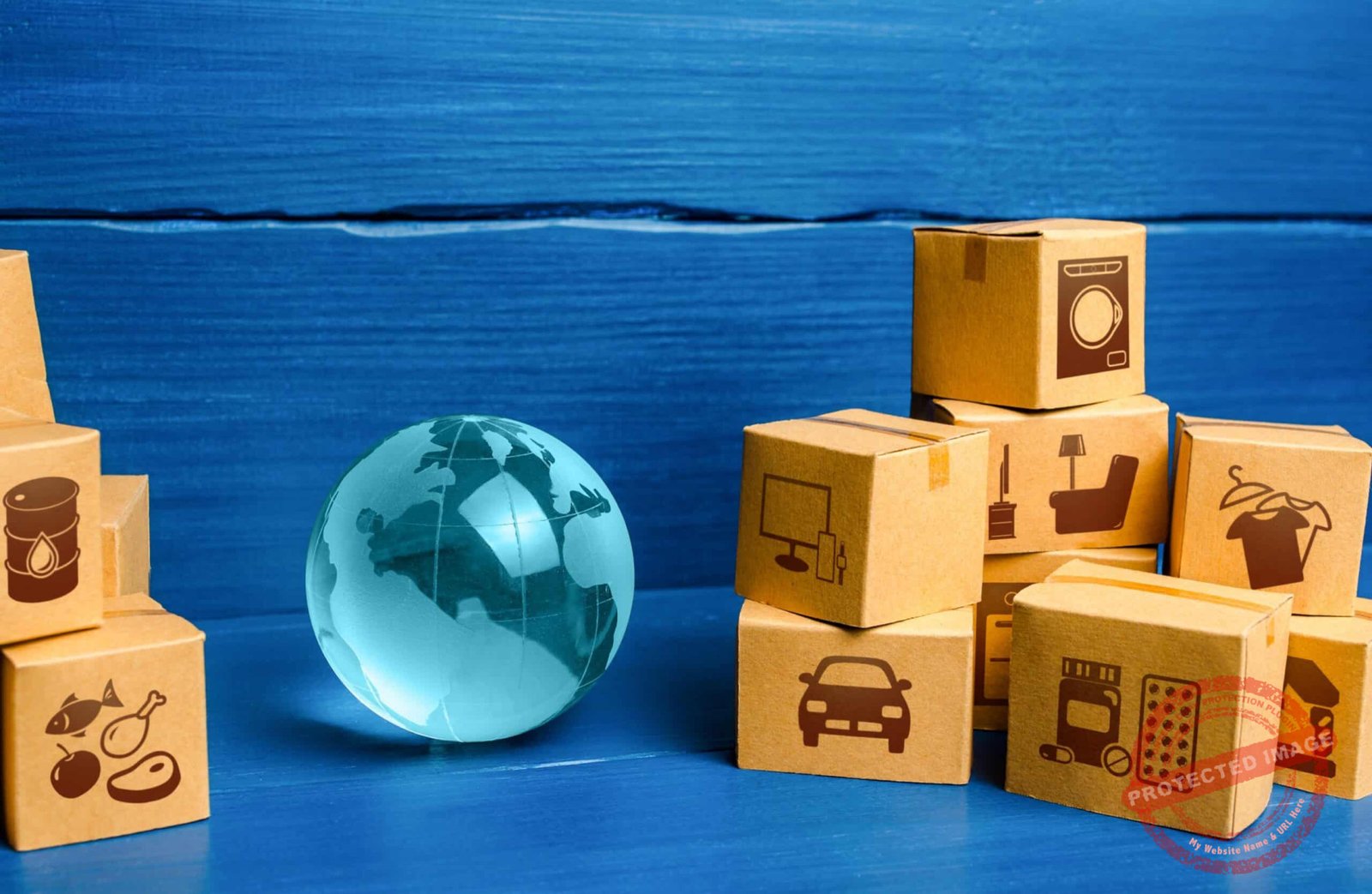
A global transportation concept
Lineupoftrucks
Black female couriers using touchpad while making a delivery in the city
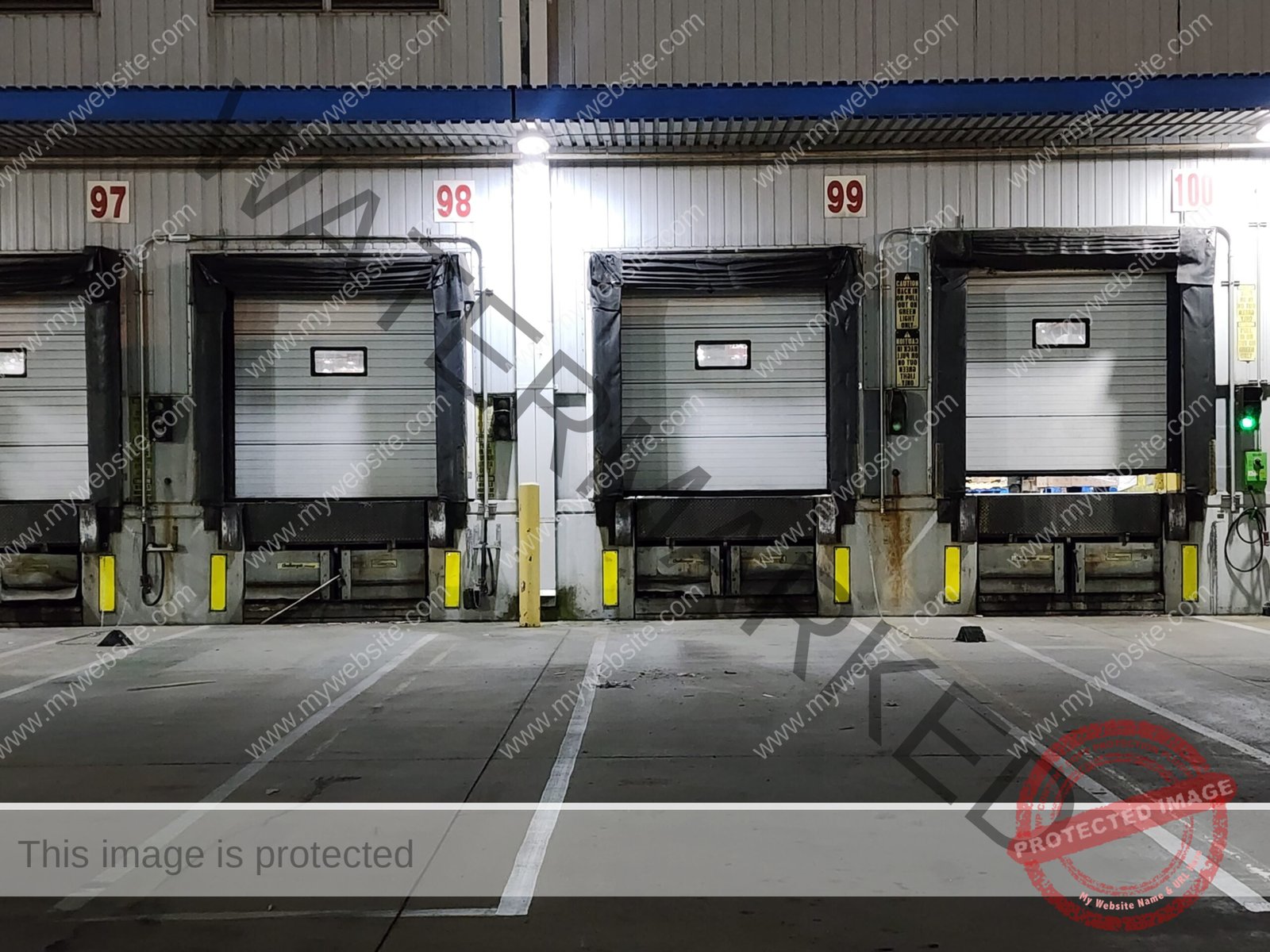
Dock doors from a distance
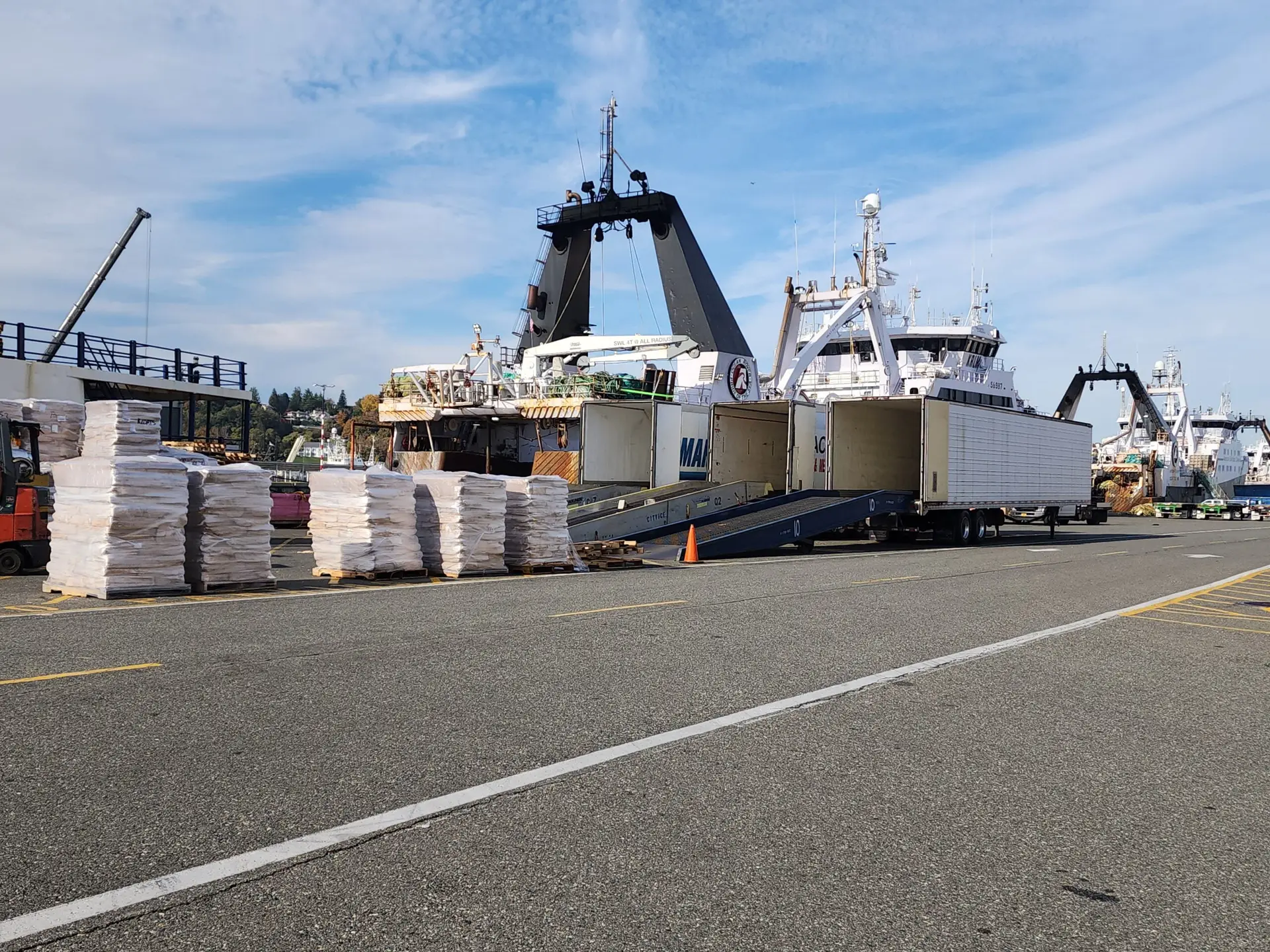
A wide shot of a port in Seattle, Washington
Truck,Transporting,Goods,Packed,In,Boxes,From,Warehouse
Scroll